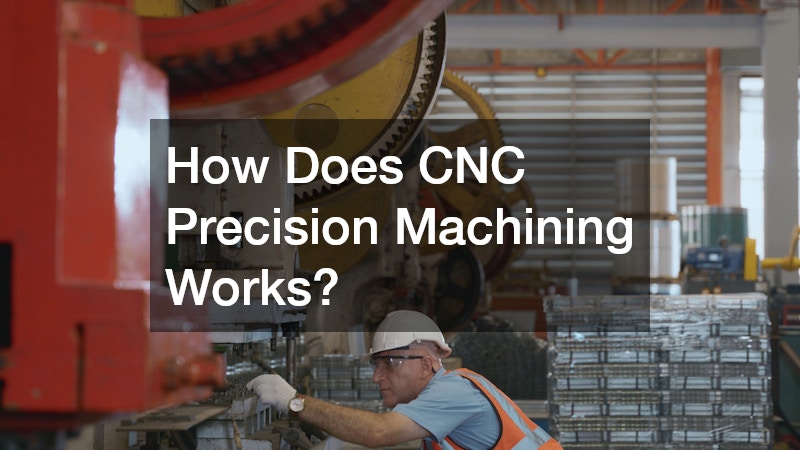

Modern manufacturing depends on accuracy in ways most people never see. A small miscalculation in a medical implant, aircraft bracket, or automotive component can lead to expensive failures and safety risks. That is why CNC precision machining has become one of the most important manufacturing processes in the world. It allows manufacturers to produce highly detailed, repeatable parts with remarkable consistency.
While the technology sounds complex at first, the basic concept is surprisingly straightforward. CNC machines follow computer-programmed instructions to cut, shape, and finish raw materials into precise components. The real sophistication comes from how carefully every stage is controlled, from the initial design to the final inspection.
Understand the Basics of CNC Precision Machining
At its core, CNC stands for “Computer Numerical Control.” Instead of relying entirely on manual operation, machinists program computers to guide cutting tools through exact movements. The machine then performs those actions automatically.
What makes CNC precision machining especially valuable is repeatability. Once the programming is perfected, the machine can create hundreds or thousands of nearly identical components. That consistency matters in industries where tolerances are measured in thousandths of an inch.
Manufacturers also appreciate the reduced margin for human error. Traditional machining often depended heavily on operator skill throughout the process. CNC systems still require experienced technicians, but much of the precision comes from the software itself.
Follow the CNC Precision Machining Process Step by Step
The machining process begins long before any metal is cut. Most projects start with a digital design created using CAD software. Engineers build a highly detailed 3D model that defines every measurement, curve, and hole placement.
At this stage, even minor design decisions can affect manufacturing efficiency. Sharp internal corners, unnecessary complexity, or unrealistic tolerances may increase machining time dramatically. Experienced engineers often adjust designs early to avoid expensive production slowdowns later.
Once the design is complete, CAM software converts the model into machine-readable instructions called G-code. These instructions control nearly every machine action, including:
- Cutting depth
- Tool movement
- Spindle speed
- Feed rate
- Cooling operations
After programming, operators prepare the machine itself. Raw materials are secured firmly in place, cutting tools are installed, and calibration checks are performed. This setup phase requires patience because even slight alignment issues can affect the final product.
During operation, CNC machines remove material layer by layer. Some projects take only minutes, while others require hours of careful machining across multiple stages. Operators monitor temperature, vibration, and tool wear throughout the process. Even automated systems still rely heavily on human oversight when precision matters most.
Choose the Right Materials for Better Machining Results
Material selection influences far more than cost. It affects machining speed, surface quality, durability, and even long-term product performance.
When choosing materials, manufacturers typically evaluate:
- Environmental exposure
- Weight requirements
- Heat resistance
- Structural strength
- Cost efficiency
A part designed for laboratory equipment will have very different requirements than one installed inside a high-performance engine.
Learn the Key Advantages of CNC Precision Machining
One of the biggest advantages of CNC machining is the ability to create highly complex parts consistently. Multi-axis machines can rotate and cut materials from several directions simultaneously, allowing manufacturers to produce shapes that would be extremely difficult manually.
This flexibility becomes especially useful for custom prototypes and advanced engineering projects. Designers are no longer limited to simpler geometries just because manufacturing would be too difficult otherwise.
For businesses balancing deadlines, labor costs, and customer expectations, that predictability is often just as valuable as the precision itself.
Avoid Common CNC Precision Machining Challenges
Despite its advantages, CNC machining is not immune to problems. Tool wear remains one of the most common frustrations in production shops. As tools gradually dull, surface finishes worsen and dimensional accuracy begins to drift.
Regular maintenance helps prevent larger failures. Shops that postpone calibration or ignore vibration warnings often face expensive downtime later.
Another overlooked issue involves cutting speeds and feed rates. Faster settings may increase production output temporarily, but they can also shorten tool life dramatically or damage delicate materials. Experienced machinists constantly balance speed with precision to achieve reliable results.
Explore Industries That Depend on CNC Precision Machining
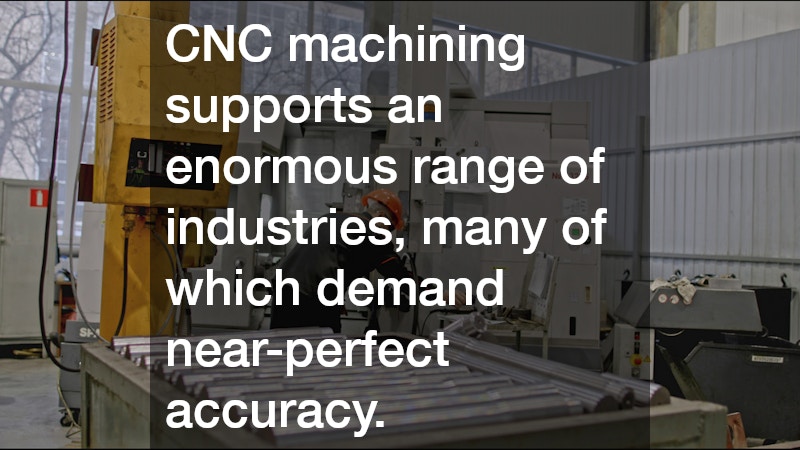
CNC machining supports an enormous range of industries, many of which demand near-perfect accuracy.
In aerospace manufacturing, precision is critical because components experience extreme temperatures and stress. Automotive companies use CNC systems to create engine parts, suspension components, and transmission housings with consistent tolerances.
Medical manufacturing may be even more demanding. Surgical instruments, orthopedic implants, and dental components all require exceptional precision and cleanliness standards. A tiny dimensional error could affect patient safety directly.
The future of manufacturing will likely push CNC technology even further. Faster automation, smarter software, and advanced robotics are already reshaping production floors worldwide. Yet the foundation remains the same: combining digital precision with skilled oversight to create reliable, high-quality parts efficiently.