
When considering an MRI scan, the traditional machine is often daunting due to its confined space and horizontal layout. However, the introduction of the upright MRI scanner has revolutionized how patients experience these critical diagnostic procedures. With an open and upright design, this scanner caters to patients who may suffer from claustrophobia or discomfort in traditional MRIs.
The upright MRI scanner allows individuals to be scanned in various positions, including standing or seated, making it more versatile for assessing conditions influenced by posture or gravity. As technology advances, these scanners continue to provide comparable imaging quality to their traditional counterparts, ensuring precise and reliable diagnostic results.
The development and integration of upright MRI technology have broadened the scope of its application in medical diagnostics. Unlike traditional MRI systems, the upright MRI offers a unique perspective, particularly beneficial for orthopedic assessments. Imaging results can be obtained with the patient in a weight-bearing position, allowing doctors to better understand how certain ailments respond to different body positions. Conditions affecting the spine, for instance, can be more accurately diagnosed when the body is in a natural posture, thus providing critically valuable insights. Furthermore, advancements ensure that image fidelity is maintained, supporting complex diagnostic and surgical planning.
Patients often express concern about the magnetic field strength of these machines when compared to horizontal MRIs. While some upright MRI scanners may possess lower field strengths, they have been shown to be effective in capturing high-quality images for many diagnostic needs. Technological improvements mean that these images can be enhanced digitally to ensure clarity. This makes the upright MRI scanner a viable choice for both healthcare providers and patients, ensuring that despite positioning, the imaging remains diagnostically relevant. Importantly, this innovative approach to imaging maintains patient comfort without compromising on clinical accuracy.
The Patient Experience During an Upright MRI
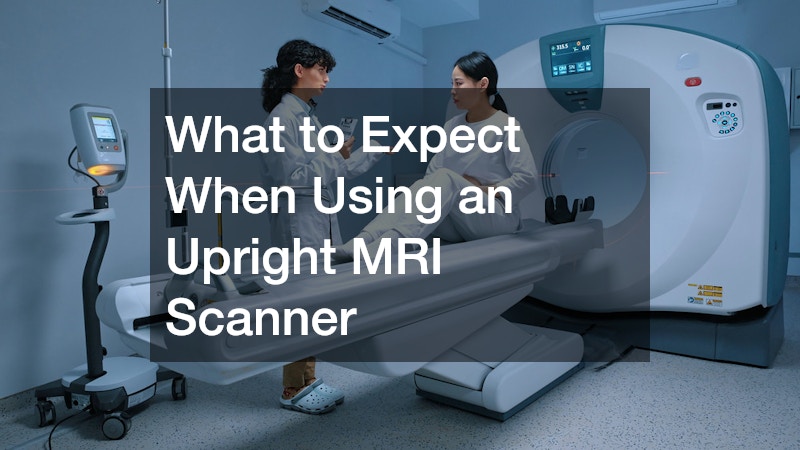
Comfort and accessibility are at the forefront of the upright MRI scanner’s benefits, offering patients a less intimidating scanning experience. Traditional MRIs can be stressful due to the confined tunnel that patients must lie in, which is not an issue with the open aspect of the upright MRI. For those who experience anxiety or claustrophobia, the ability to have family members present during the scan can further alleviate stress. This design ensures that patients remain relatively relaxed, with the freedom to position themselves naturally during scans. As a result, the experience of undergoing this type of MRI is significantly more pleasant and patient-friendly.
Additionally, the upright position can contribute to a more accurate diagnosis for conditions that manifest differently depending on the body’s alignment. Unlike standard MRIs, which may require the patient to lie motionless, the upright MRI can accommodate a natural seated or standing position. This adaptation is particularly vital for evaluating how joint and spinal conditions might present themselves under bodily stress, or when other body parts contribute to symptomology. The unique advantage lies in the ease of capturing a range of postural influences on specific conditions. Consequently, these personalized diagnostic perspectives can lead to more effective treatment plans tailored to the individual patient’s needs.
Furthermore, upright MRI scanners are designed to be inclusive and accessible, catering to a wide range of patients, including children and those with disabilities. The flexibility of the machine allows for easier access without needing the patient to reposition into a horizontal state, which can often be challenging. In particular, individuals with mobility issues or severe pain are benefited by avoiding unnecessary physical strain during the scan process. The upright design not only addresses physical comfort but also increases the likelihood of receiving comprehensive diagnostic services for patients who might otherwise refrain from getting a traditional MRI. The overall patient-centric approach of an upright MRI scanner continues to set new standards in healthcare accessibility.
Diagnostic Applications and Advantages
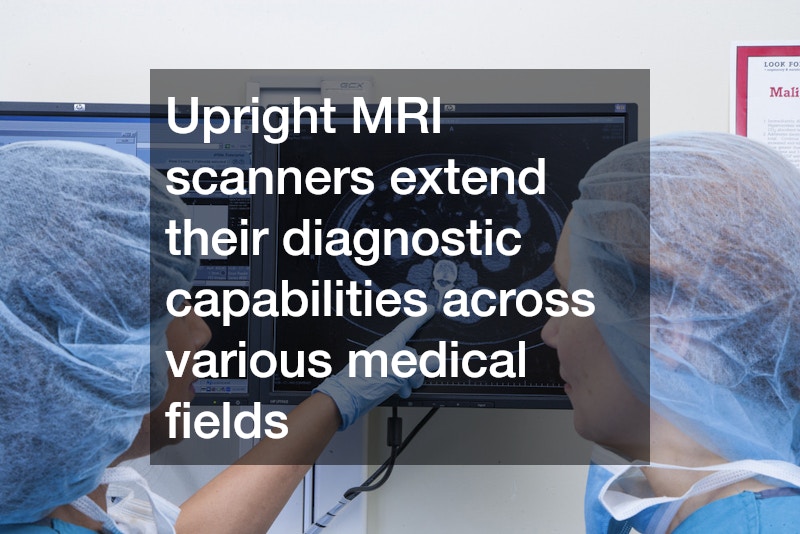
Upright MRI scanners extend their diagnostic capabilities across various medical fields, providing insights difficult to obtain from traditional MRI scans. The weight-bearing feature is especially advantageous for orthopedic evaluations, granting greater accuracy in diagnosing issues related to spinal compression or joint alignment under normal physical stress. Doctors may gain enhanced understanding by analyzing images taken while the patient naturally bears their weight, which can often reveal pathological misalignments or other conditions that may not appear on horizontal scans. As the upright MRI gains popularity, more physicians are opting for this approach to better align patient symptoms with diagnostic results, ultimately influencing treatment paths. The adaptability of upright scanners ensures they meet various needs, from complex spinal exams to motion assessments.
Radiological applications are progressing thanks to the upright MRI’s ability to accommodate diverse scanning postures. Neurological evaluations, for example, benefit considerably from the machine’s structural flexibility. By allowing the patient to stand, sit, or rotate during the scan, physicians gain a dynamic view of how neurological responses and disorders affect bodily functions. These capabilities encourage more comprehensive mapping of brain and nerve activities compared to traditional methods, supporting breakthroughs in diagnosing conditions such as multiple sclerosis, epilepsy, and more. The adaptability and comprehensive imaging prospects make upright MRIs valuable assets in advanced radiological assessments.
While the application of upright MRIs is wide-ranging, intersections with emerging robotic surgery highlight a particular frontier of growth. With the precise imaging provided by these scanners, surgeons can plan more accurately and conduct minimally invasive procedures with reduced risk. Technologies that integrate such cutting-edge imaging solutions continue to make surgical interventions safer and more efficient. The collaborative use of upright MRIs and advanced surgical tools reflects a broader trend in personalized medicine, where detailed imaging plays a critical role in customizing therapeutic approaches. This level of precision highlights the future potential and relevance of upright MRI scanners in medicine.