
As organizations continue to demand faster, more reliable data transmission, network infrastructure must evolve to handle increasing bandwidth requirements without significantly increasing costs. One technology that plays a critical role in maximizing existing fiber optic infrastructure is the fiber multiplexer. By allowing multiple signals to travel over a single fiber strand, multiplexing technology helps businesses, telecommunications providers, and data centers improve performance while reducing the need for additional physical cabling.
Understanding Fiber Multiplexers
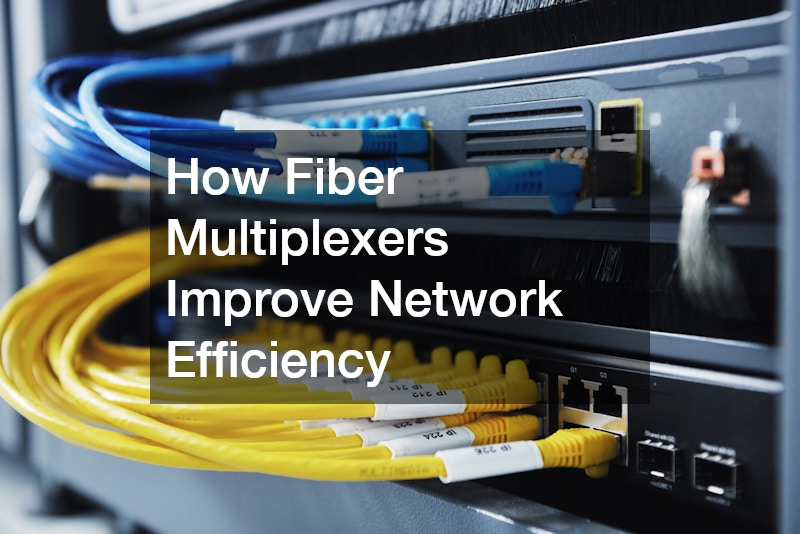
Fiber multiplexers are devices that combine multiple optical signals onto a single fiber optic cable for transmission. At the receiving end, a corresponding demultiplexer separates the signals and directs them to their intended destinations.
This process enables network operators to transmit multiple data streams simultaneously without requiring separate fiber connections for each signal.
The technology is commonly used in wavelength division multiplexing (WDM) systems, where different wavelengths of light carry separate data channels over the same fiber. This approach significantly increases the amount of information that can be transmitted through existing infrastructure while minimizing the costs associated with installing additional fiber optic lines.
Maximizing Bandwidth Utilization
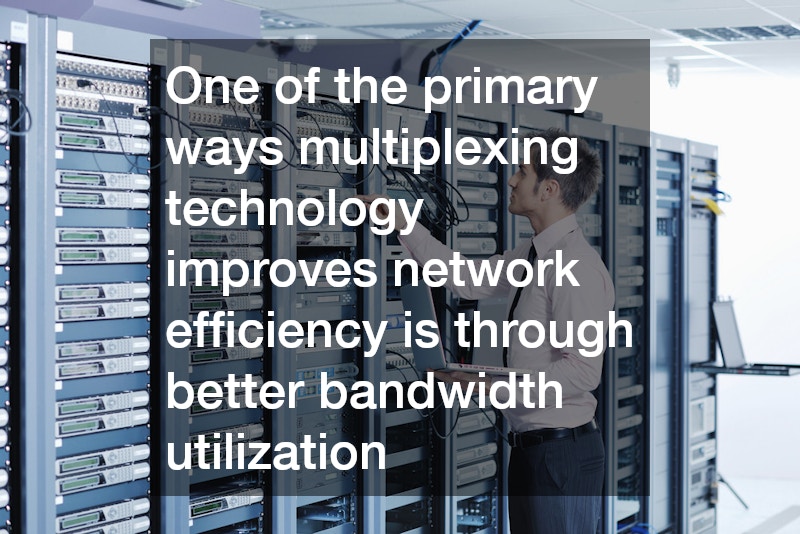
One of the primary ways multiplexing technology improves network efficiency is through better bandwidth utilization. Traditional fiber networks often dedicate an entire fiber strand to a single communication channel, leaving significant capacity unused. Multiplexing allows multiple channels to share the same fiber, maximizing the available bandwidth.
This capability is especially valuable for telecommunications providers and enterprise networks that must support growing volumes of voice, video, cloud applications, and data traffic. Instead of deploying new cables whenever bandwidth demands increase, organizations can leverage multiplexing solutions to expand capacity using their existing infrastructure.
By making better use of available resources, businesses can delay expensive network upgrades while still meeting performance requirements.
Reducing Infrastructure Costs
Installing new fiber optic cabling can be both costly and time-consuming. Construction, permitting, labor, and equipment expenses can quickly add up, especially for large-scale deployments or long-distance network connections.
By using fiber multiplexers, organizations can significantly reduce these costs. Multiple signals can be transmitted through a single fiber pair, minimizing the need for additional cabling and reducing overall infrastructure expenditures.
This cost-saving advantage is particularly beneficial for data centers, educational institutions, healthcare facilities, and government organizations that need to expand network capacity while working within budget constraints. The ability to increase network performance without extensive physical upgrades makes multiplexing technology a highly attractive solution.
Supporting Network Scalability
Modern networks must be designed with future growth in mind. As businesses adopt cloud computing, artificial intelligence, Internet of Things (IoT) devices, and high-definition video applications, network traffic continues to rise.
Fiber multiplexing solutions provide a scalable foundation that can accommodate increasing demands without major infrastructure overhauls. Additional wavelengths or channels can often be added as needed, allowing organizations to expand capacity incrementally.
This scalability helps businesses avoid the disruption and expense associated with large-scale network redesigns. Instead, they can adapt their infrastructure as requirements evolve, ensuring long-term flexibility and operational efficiency.
Enhancing Reliability and Performance
Network reliability is essential for maintaining productivity and ensuring uninterrupted communication. Multiplexing technologies contribute to network performance by simplifying infrastructure and reducing potential points of failure.
When multiple services are consolidated onto fewer fiber connections, network management becomes more streamlined. Administrators can monitor and maintain fewer physical links while still supporting a wide range of applications and services.
In addition, many multiplexing systems are designed with redundancy and fault-tolerance features that help maintain service continuity in the event of equipment failures. This reliability is especially important in mission-critical environments such as financial institutions, healthcare networks, and telecommunications systems.
Enabling Efficient Data Center Operations
Data centers face constant pressure to support growing workloads while maintaining efficient operations. Fiber optic connectivity plays a crucial role in linking servers, storage systems, and network devices throughout the facility.
By incorporating fiber multiplexers, data center operators can optimize their fiber infrastructure and increase capacity without adding excessive cabling. This approach helps reduce cable congestion, improve airflow, and simplify network architecture.
The result is a more organized, efficient environment that supports higher data throughput while minimizing operational complexity. As data center demands continue to grow, multiplexing technology remains an important tool for maximizing infrastructure efficiency.
Supporting Long-Distance Communications
Fiber optic networks are widely used for long-distance communication because they offer high-speed transmission with minimal signal loss. Multiplexing technology further enhances these capabilities by allowing multiple channels to travel over a single fiber path.
This approach is commonly used in metropolitan area networks, regional telecommunications systems, and intercity connections. Organizations can deliver more services across longer distances without significantly increasing infrastructure costs.
By maximizing the capacity of existing fiber routes, service providers can improve network efficiency while delivering reliable connectivity to customers and end users.
Conclusion
As network demands continue to increase, organizations must find cost-effective ways to expand capacity and improve performance. Multiplexing technology offers a practical solution by enabling multiple data channels to share a single fiber optic connection. Through better bandwidth utilization, reduced infrastructure costs, enhanced scalability, and improved reliability, fiber multiplexers help organizations maximize the value of their existing networks.
Whether supporting telecommunications systems, enterprise environments, or modern data centers, fiber multiplexing solutions play a vital role in creating efficient, high-performance networks capable of meeting today’s connectivity challenges and tomorrow’s growth opportunities.